Every NHL Draft has its own little storylines.
There are the obvious ones — who went first overall, who slipped, who reached, who made the room gasp, and which team walked away looking like they knew something everyone else didn’t.
But one of the best parts of draft night is looking at the board once the entire first round is done and asking one simple question:
Where did all these players come from?
Because the NHL is not just a Canadian league anymore. It has not been for a long time. The first round is now a full international scoreboard. Canada, Sweden, the United States, Finland, Russia, Czechia, Latvia and the Cayman Islands — every year, the map gets a little wider.
And this year, the first round gave us a pretty interesting breakdown.
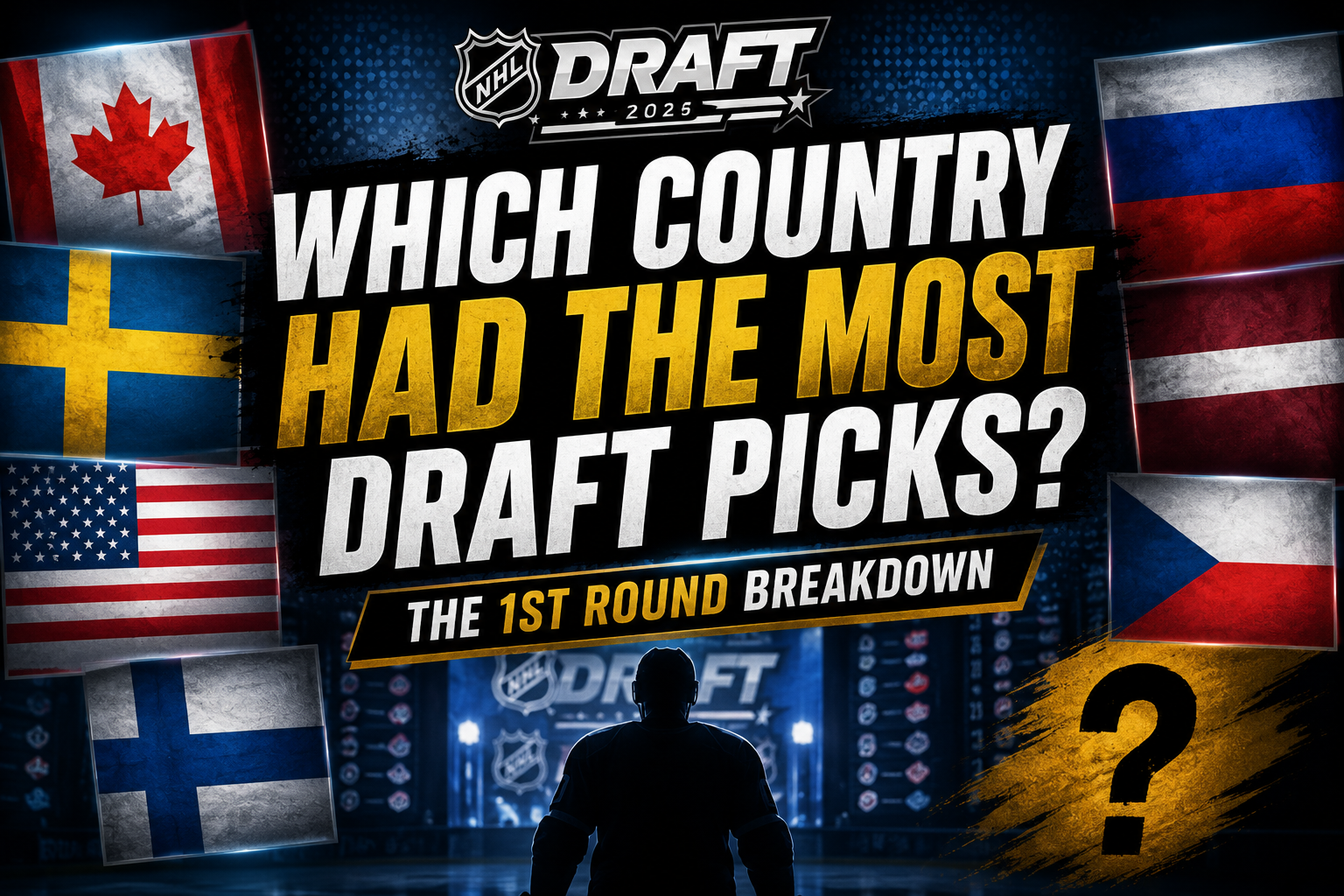
The big question: which country had the most players selected in Round 1?
Let’s build the suspense a little.
Sweden had a huge night. That was obvious right from the top of the draft when Ivar Stenberg went second overall to the San Jose Sharks. Anytime a Swedish forward goes that high, it is a statement. But Sweden did not stop there. They kept popping up throughout the first round, with names like Malte Gustafsson, Elton Hermansson, Jonas Lagerberg Hoen, and Marcus Nordmark helping give the Swedes one of the strongest draft showings of any country.
Then there was the United States, which had another solid night. American development keeps producing high-end forwards, mobile defencemen, and players who are coming out of NCAA, USHL, and major junior paths with more polish than ever. The U.S. did not run away with the first round, but it stayed firmly in the mix.
Finland had its moments too. Three Finnish players going in the first round is nothing to ignore, especially when you consider how often Finnish prospects turn into smart, responsible, NHL-ready players. Finland may not always have the biggest number, but when they hit, they usually hit with players coaches trust.
Russia also had three first-rounders, which is always interesting because Russian prospects can be some of the most debated names in the draft. The talent is obvious. The risk, development path, and availability questions are usually what make teams pause. Still, three Russian-linked players in Round 1 shows teams are still willing to swing on upside.
Latvia, Czechia and the Cayman Islands each got on the board as well. That matters. A first-round pick from one of the smaller hockey nations always stands out because it shows just how global the talent pool has become. It is not just the traditional powers feeding the NHL anymore.
But even with all of that, one country still finished on top.
And yes, it was Canada.
Canada led the first round with 10 players selected under the country-of-origin grouping explained below.
Maybe that does not shock anyone, but it still matters. In a draft that felt very international, Canada still had the deepest first-round presence. From Gavin McKenna going first overall to Caleb Malhotra, Daxon Rudolph, Carson Carels, Keaton Verhoeff, Tynan Lawrence, Maddox Dagenais, Ethan Belchetz, Ryan Lin and Liam Ruck, Canadian prospects were all over the board.
That is the difference with Canada. It is not just one superstar at the top. It is the depth.
Canada had high-end skill, defencemen, forwards, size, speed, and different styles of players represented across the first round. Some were obvious top-end talents. Others were team-fit picks. Some were upside swings. Some were safer projections. But together, it painted the same picture we have seen for years: Canada still produces volume.
Sweden finished second with 7 first-round picks, which is probably the bigger headline if you are looking for the “who had a sneaky monster night?” angle. Seven Swedes in the first round is a massive result, and it speaks to how strong Sweden’s development system continues to be, especially with players who can skate, think the game, and handle structure.
The United States came in with 6, while Finland and Russia each had 3. Latvia, Czechia and the Cayman Islands each accounted for one first-round selection in this editorial grouping.
So the final first-round nationality breakdown looked like this:
Canada: 10
Sweden: 7
United States: 6
Finland: 3
Russia: 3
Latvia: 1
Czechia: 1
Cayman Islands: 1
The takeaway?
Canada still leads the room, but the gap is not what it used to feel like.
Sweden is coming. The U.S. keeps producing. Finland and Russia remain dangerous. Smaller countries are finding ways to push prospects into the first round. The NHL Draft is becoming more and more global, and that is good for the league.
But for this year, when the full first round was done and the nationalities were counted, Canada still stood at the top.
Ten first-rounders in this country-of-origin grouping.
Another draft night reminder that when it comes to producing NHL talent, Canada is still hard to catch.
Source and nationality-count methodology
The underlying draft order and player selections can be checked against NHL.com’s official 2026 first-round tracker. Correction, October 26, 2026: A player-by-player recount of the 32 first-round selections corrected the earlier Canada (12) and United States (5) totals. The table above now sums to 32. This is a HockeyGamedayTV country-of-origin editorial grouping, cross-checked against the NHL draft record and published first-round nationality table; it is not a statement of legal citizenship or international-team eligibility. Dual-nationality players may be classified differently in other databases.
For example, Ottawa’s first-round selection Jaxon Cover grew up in the Cayman Islands before moving to Canada at age 12. Cover is grouped with the Cayman Islands here because of his upbringing and the NHL’s profile of his route to the draft, not because we have established his legal nationality. A birthplace-based count and a hockey-development or representation-based grouping can differ. Fans should therefore use the figures above as an editorial snapshot and consult each player’s verified profile when discussing nationality or eligibility.