
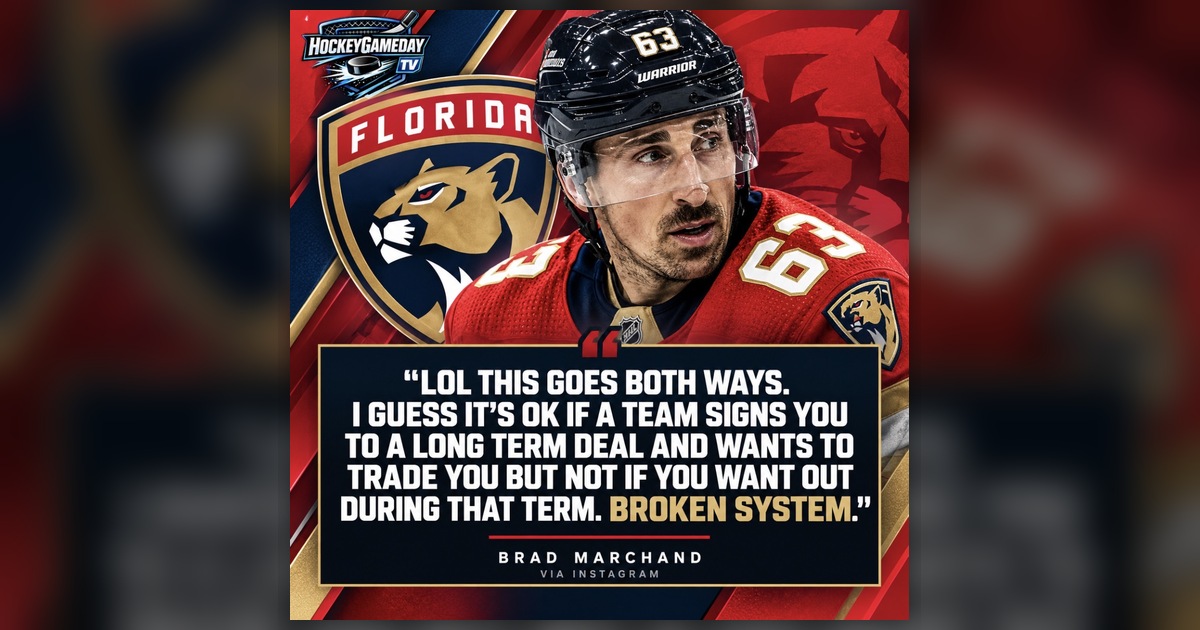
Florida Panthers veteran Brad Marchand has entered the NHL’s growing debate over player movement — and he clearly doesn’t see the issue the same way as commissioner Gary Bettman.
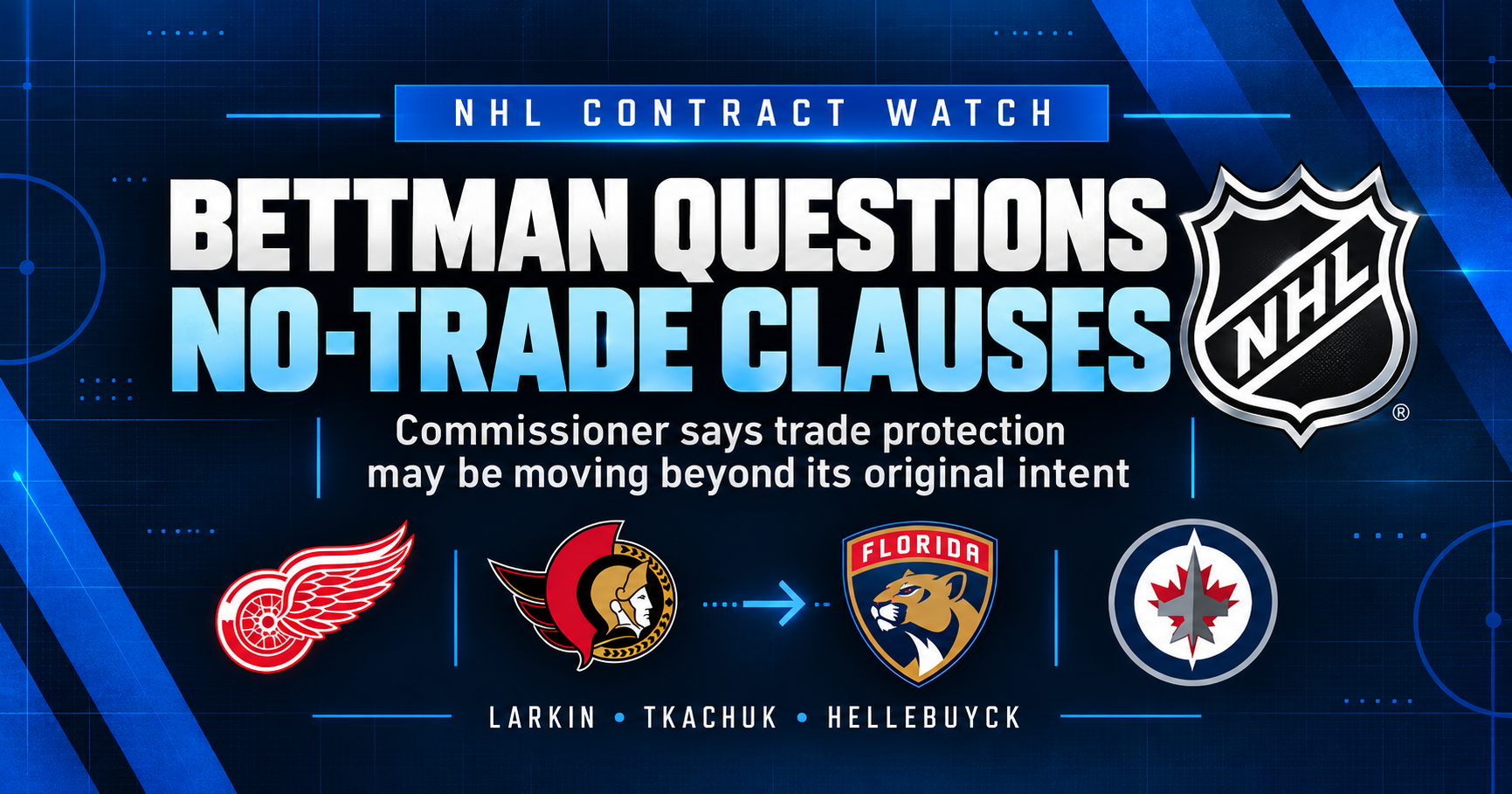
Bettman appeared on Sportsnet’s The FAN Hockey Show on October 1 and expressed concern about how no-trade and no-movement clauses are being used by NHL players. He said the protections were originally intended to give players stability after signing long-term contracts, but argued that some players are now using those clauses to request trades while maintaining significant control over their destination.
Marchand responded publicly on Instagram the following day.
“Lol this goes both ways. I guess it’s ok if a team signs you to a long term deal and wants to trade you but not if you want out during that term. Broken system.”
Brad Marchand, via Instagram
Bettman Questions How No-Trade Clauses Are Being Used
Bettman’s concern centers on the original purpose of contractual trade protection. In his view, a no-trade or no-movement clause was designed primarily to protect a player who committed to a team long-term and wanted certainty about where he would play.
Speaking to Sportsnet, Bettman said the league has “gotten past the way no-trade clauses were originally intended.” He also said one offseason alone does not necessarily make it a league-wide problem, but indicated the NHL could discuss the issue with the NHL Players’ Association if the trend continues.
Marchand Says It Has To Work Both Ways
Marchand’s response highlights the other side of the argument.
Teams can sign players to multi-year contracts and later decide they want to move them, depending on the trade protection negotiated into the deal. Marchand’s point is that players using their own negotiated contractual rights to gain control over their futures should also be part of the conversation.
His two-word conclusion — “Broken system” — quickly turned the exchange into a larger debate about how much control teams and players should each have once a long-term contract is signed.
Could NHL No-Trade Clauses Eventually Change?
Nothing is changing immediately. Bettman described the situation as something the league intends to monitor rather than announcing a new rule or policy.
Any larger change involving negotiated no-trade or no-movement protection would also require discussions with the NHLPA.
For now, the disagreement is clear: Bettman believes the league may be moving away from the original purpose of no-trade protection, while Marchand argues the issue cuts both ways when either a team or a player wants to move on from a long-term agreement.
What Do You Think?
Is Marchand right that the issue goes both ways, or does Bettman have a point about how no-trade clauses are being used?
Sources: Sportsnet, Reuters, and Marchand’s Instagram response as reported by Gino Hard.



Leave a Reply